Iran-US Tensions Escalate: Bases Hit, Oil Markets Shrug
The US struck Iranian infrastructure and 90 coastal military targets as Iran retaliated against US bases in Bahrain and Kuwait — yet oil barely budged.
Things got very real overnight in the Middle East, and if you were expecting oil markets to go haywire, well — they didn't, at least not dramatically. The US carried out cruise missile strikes on two railway bridges in Iran's Golestan province, marking the first American hit on Iranian civilian infrastructure since a ceasefire had been in place. At the same time, CENTCOM confirmed strikes on roughly 90 Iranian coastal military targets, including air defense systems, missile and drone storage facilities, and naval logistics infrastructure. That's a significant escalation by any measure.
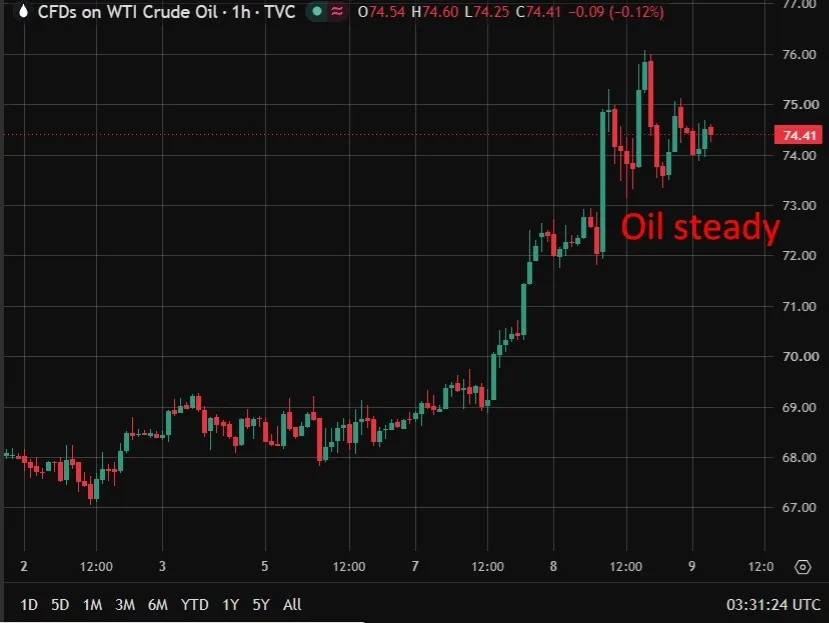
Iran didn't sit quietly. The Islamic Revolutionary Guard Corps announced retaliatory attacks, and missiles were launched toward Bahrain, with Gulf air raid sirens sounding across the region. Iran also threatened a "widespread attack" on US military bases throughout the area. Kuwait bases were reportedly hit as well. Despite all that firepower flying around, oil prices moved only modestly higher — a reminder that markets had already been pricing in Middle East risk, and traders may be waiting to see whether the Strait of Hormuz actually gets blocked before fully panicking.
Read more AES Corp. Stock Rises on Ohio Regulator's Favorable Consortium Ruling →
On the diplomatic front, there's a flickering hope of de-escalation. President Trump claimed Iran reached out, saying the Iranians "called a short while ago — they want to make a deal," per an Axios report. Iran's Parliament Speaker, however, struck a harder tone, suggesting the Strait of Hormuz would only reopen under certain conditions. Whether backdoor diplomacy can cool things down before the next strike remains the big unknown hanging over energy markets.
Elsewhere in the Asia-Pacific session, markets were doing their own thing. A chipmaker rally pushed Japan's Nikkei and South Korea's KOSPI higher. The Bank of Korea flagged a potential rate hike as inflation hit multi-year highs, while China's factory-gate prices surged to a four-year peak even as consumer inflation came in softer than expected at just 1% year-over-year against a 1.2% forecast. New Zealand manufacturing also popped to a five-year high. Busy night all around.
Continue reading at Forexlive