Mercury May Be Shrinking Faster Than Scientists Expected
New research suggests the smallest planet in our solar system is contracting at a surprising rate, raising fresh questions for planetary scientists.
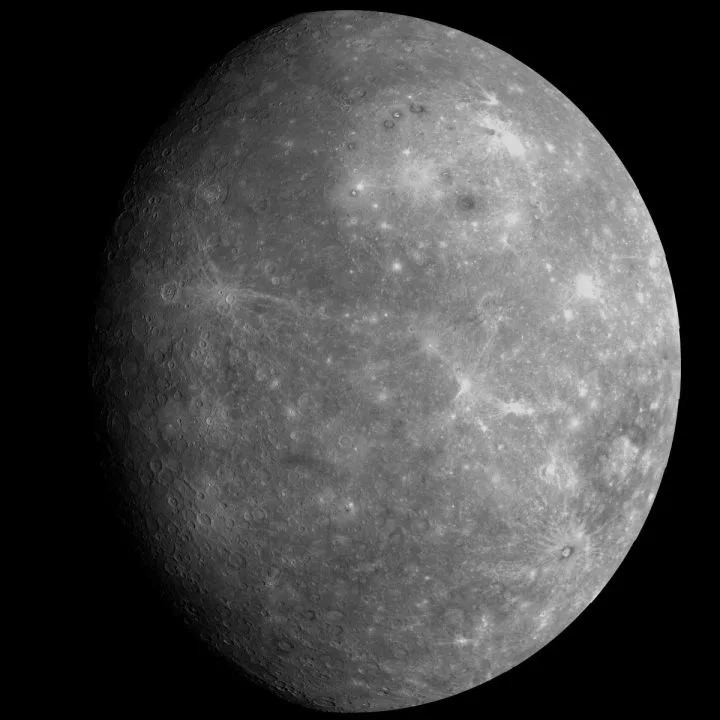
Mercury has always been something of an oddball in our solar system — it's tiny, it's scorched, and it's surprisingly dense. But now scientists are adding another quirk to the list: the little planet may be shrinking even faster than researchers previously thought, according to a report from the Associated Press via WIVB.
Planetary scientists have long known that Mercury is cooling and contracting over time, a process that shows up on its surface as long cliff-like features called scarps. Think of it like a grape slowly drying into a raisin — as the interior cools, the outer shell wrinkles and buckles. The question has always been just *how fast* that process is happening, and new findings suggest the answer might be "faster than we realized."
Read more Private Sector Added 90,000 Jobs in September, ADP Says →
This kind of research matters beyond satisfying pure curiosity. Understanding how rocky planets contract and evolve over billions of years gives scientists a better framework for studying Earth's own geological history — and for evaluating what other rocky worlds elsewhere in the universe might look like as they age. Mercury, precisely because it lacks the complicating factors of a thick atmosphere or active plate tectonics, serves as a kind of stripped-down laboratory for planetary science.
Mercury has been on scientists' radar in a big way since NASA's MESSENGER spacecraft orbited the planet from 2011 to 2015, delivering a wealth of surface data that researchers are still mining for insights today. The planet's surprisingly large iron core and its magnetic field have both puzzled scientists for decades, and questions about its rate of shrinkage tie directly into those bigger mysteries about what's happening deep inside.
Whether this new data shifts the broader consensus on Mercury's evolution remains to be seen, but it's a reminder that even the most-studied corners of our solar system still have surprises left to offer. Continue reading at wivb (the associated press).