Oil Climbs 3.5% as US-Iran Conflict Shuts Strait of Hormuz
Crude prices surge while stocks slip and gold retreats as US-Iran tensions keep global markets on edge.
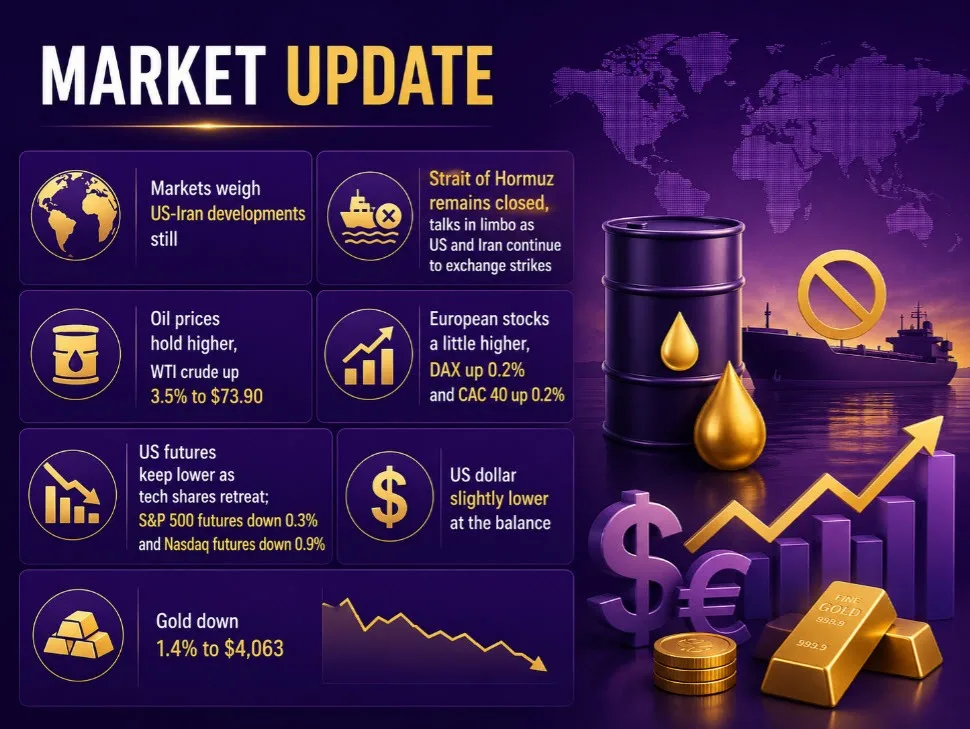
If you were hoping for a calm start to the trading week, the Middle East had other plans. US-Iran tensions are front and center again, and this time the Strait of Hormuz — one of the world's most critical oil shipping lanes — has come to a halt as both sides continue exchanging strikes. That's a big deal: a meaningful chunk of global oil supply passes through that narrow waterway, so any disruption there sends crude prices shooting higher fast.
WTI crude jumped 3.5% to $73.90 on the day, reflecting just how nervous energy traders are getting. The two countries still can't get to the negotiating table, and while Iran's foreign ministry says mediators are still working to ease the situation, Iran also made clear it won't hold up its end of any deal unless the US does too. Not exactly the de-escalation vibe markets were hoping for.
Read more Big-Money Options Activity Spotted in 10 Tech Stocks Today →
Beyond oil, the broader risk-off mood was pretty evident. S&P 500 futures slipped 0.3% while Nasdaq futures dropped a sharper 0.9%, with tech shares leading the pre-market selloff. European equities managed to hold relatively steady, though. Gold, which you might expect to rally in a risk-off environment, actually fell 1.4% to $4,063 — suggesting investors may be rotating toward cash or the dollar instead. Bitcoin also dipped around 2% to $62,863.
On the currency front, the dollar's flight-to-safety bid eased a touch during the European session. EUR/USD edged up to around 1.1430 after briefly dipping lower, while GBP/USD settled near 1.3390 — roughly flat on the day. USD/JPY pulled back slightly to 162.10, partly influenced by headlines around Japan's massive GPIF pension fund potentially tweaking its portfolio allocation.
Looking ahead, the big macro event this week is the US CPI inflation report, which could move markets significantly on its own. Fed's Williams added some hawkish flavor by saying he'd back rate hikes if monthly core inflation averages above 0.2%. But for now, everyone's still watching the Middle East. Continue reading at Forexlive.