Restaurant Brands vs. McDonald's: Fast-Food Revenue Face-Off
Two fast-food titans, one big question: whose revenue story is stronger? Here's how RBI and McDonald's stack up.
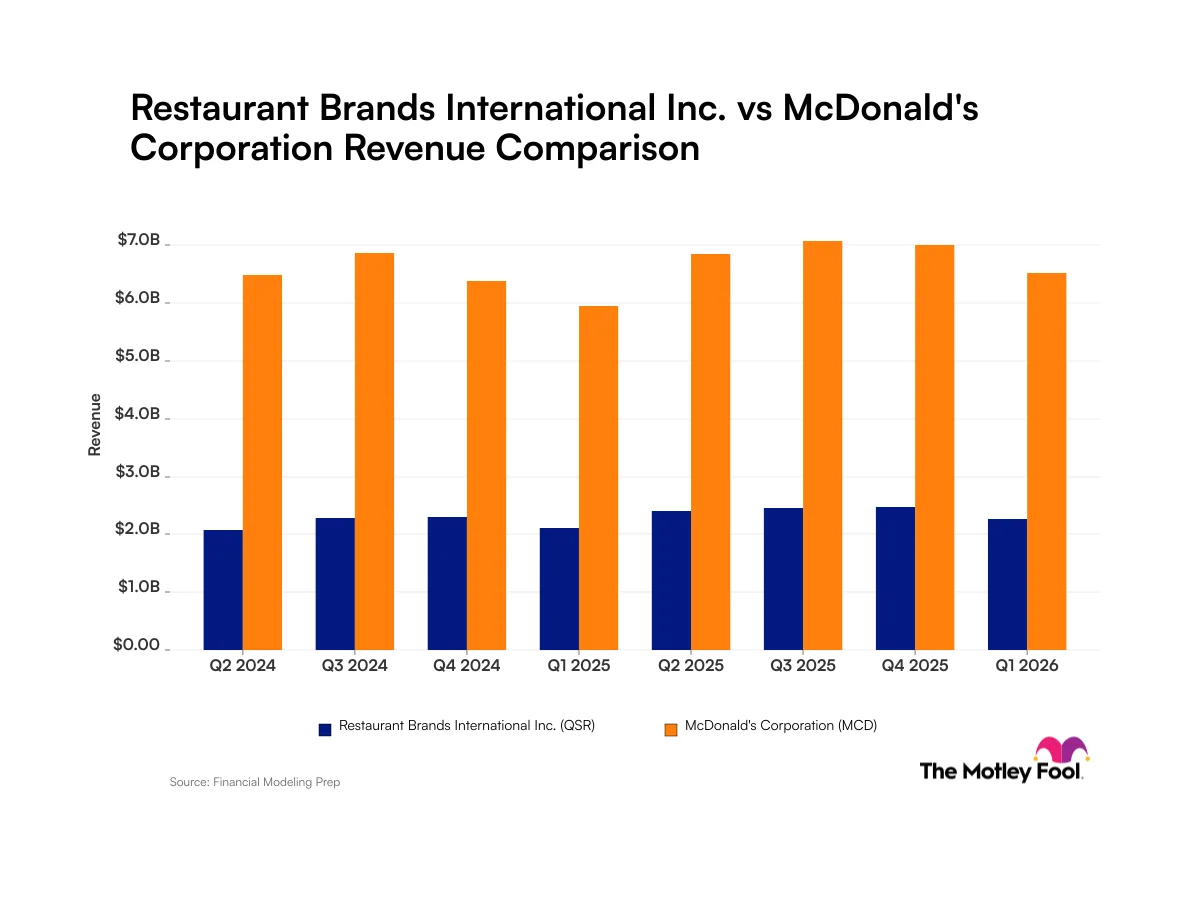
When you think of fast food dominance, McDonald's golden arches probably flash in your mind first. But Restaurant Brands International — the parent company behind Burger King, Tim Hortons, and Popeyes — is no small fry. Comparing the revenue trends of these two giants can tell you a lot about where the quick-service restaurant industry is headed and which operator is executing better in a tough consumer environment.
McDonald's has long been the undisputed heavyweight in the fast-food world, consistently generating revenues that dwarf most of its competitors. Its global footprint, franchised business model, and loyalty program investments have helped it maintain relatively stable top-line performance even when consumers are tightening their belts. When inflation squeezes household budgets, McDonald's value positioning tends to work in its favor — people trade down to fast food, and Mickey D's is often the first stop.
Read more ETF Trading Signals Inflation Fears May Be Overblown →
Restaurant Brands International, on the other hand, is playing a different kind of game. Managing multiple distinct brands under one roof means RBI has to keep several plates spinning at once. Tim Hortons drives strong performance in Canada, while Popeyes has built serious momentum in the chicken sandwich wars. Burger King, though, has been the brand most in need of a turnaround, and the company has poured resources into its 'Reclaim the Flame' revitalization plan to win back customers and franchisee confidence.
What makes this comparison genuinely interesting for investors and industry watchers is that revenue trends don't exist in a vacuum. Franchise mix, geographic exposure, menu innovation, and digital adoption all shape how these numbers move quarter to quarter. McDonald's benefits from sheer scale and brand recognition, while RBI's multi-brand structure offers diversification that could cushion blows if any single concept stumbles. Neither approach is a guaranteed winner — it really depends on what the macroeconomic backdrop looks like in the months ahead.
If you're trying to figure out which fast-food stock deserves a spot in your portfolio, digging into the actual revenue trajectory of both companies is a smart starting point. Continue reading at Yahoo Finance.