SpaceX Joins Nasdaq-100, Widening Its Volatility Gap With S&P 500
SpaceX is set to enter the Nasdaq-100 on Tuesday, but won't be eligible for the S&P 500 for at least a year — a gap that could make the indexes diverge even more.
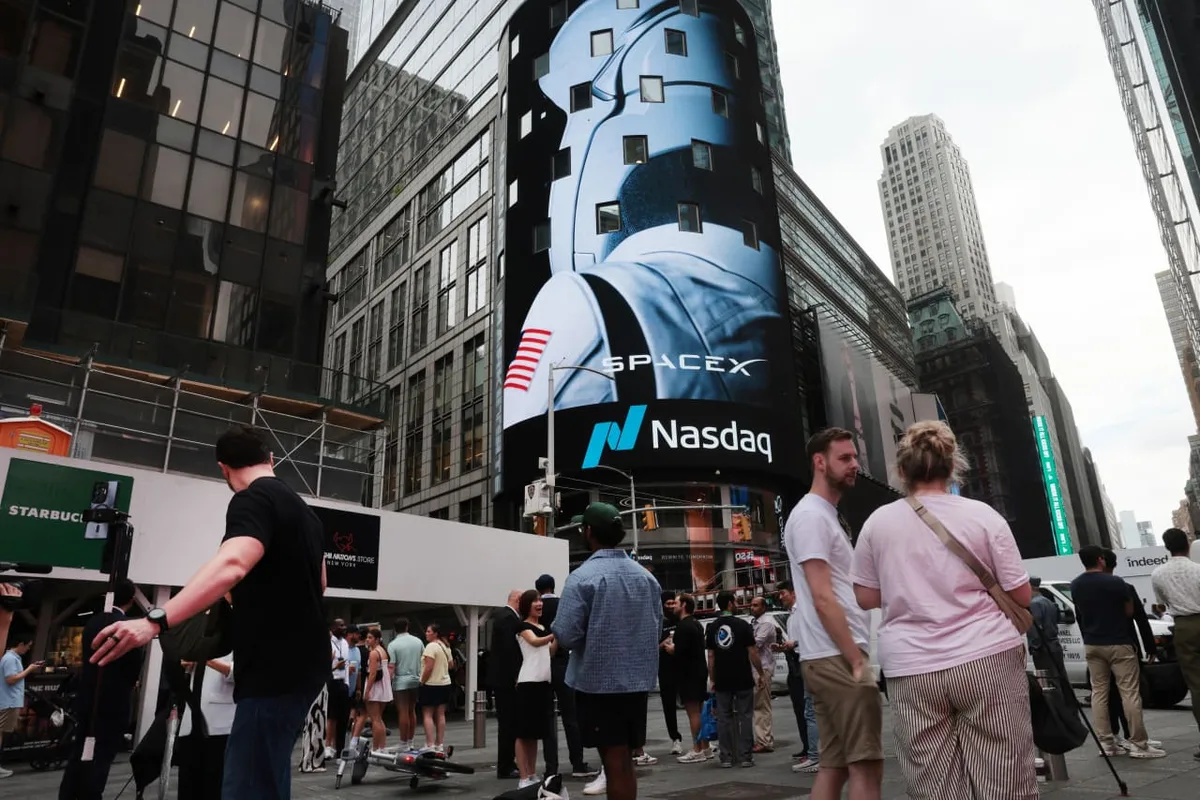
If you've ever wondered why your Nasdaq-100 ETF feels like a roller coaster compared to your S&P 500 fund, buckle up — because SpaceX just joined the ride. Elon Musk's rocket and satellite company is officially entering the Nasdaq-100 as of Tuesday, adding one of the most high-profile private-turned-public names to an index that's already known for swinging harder than the broader market.
Here's the thing: the S&P 500 isn't getting SpaceX anytime soon. According to MarketWatch, the company won't be eligible for inclusion in the S&P 500 for at least another year. That means anyone tracking the two indexes is about to watch them behave even more differently from each other than they already do — and the Nasdaq-100 has already been significantly more volatile than its S&P 500 counterpart.
Read more DRAM Prices Could Plunge Up to 90% Within Three Years →
Why does that matter to you? If your retirement account or brokerage portfolio is heavy on tech-focused Nasdaq-100 index funds — think QQQ — you're now indirectly exposed to SpaceX's fortunes. The company operates everything from rockets to Starlink internet satellites, meaning its business can be influenced by government contracts, launch successes and failures, and broader aerospace sentiment. That's a very different risk profile than your average S&P 500 component.
The S&P 500's stricter listing requirements — including profitability thresholds and a longer public trading history — are precisely why SpaceX has to wait in line. The Nasdaq-100, by contrast, tends to move faster in adding hot names, which is part of what gives it that extra zip (and extra dip) compared to the S&P 500. So don't be surprised if the two indexes keep drifting apart in behavior as SpaceX starts influencing Nasdaq-100 returns.
Continue reading at MarketWatch.com