What Bitcoin's BIP-110 Debate Tells Us About Crypto Markets
Bitcoin's BIP-110 episode reveals how free-market forces shape crypto protocol decisions without central authority.
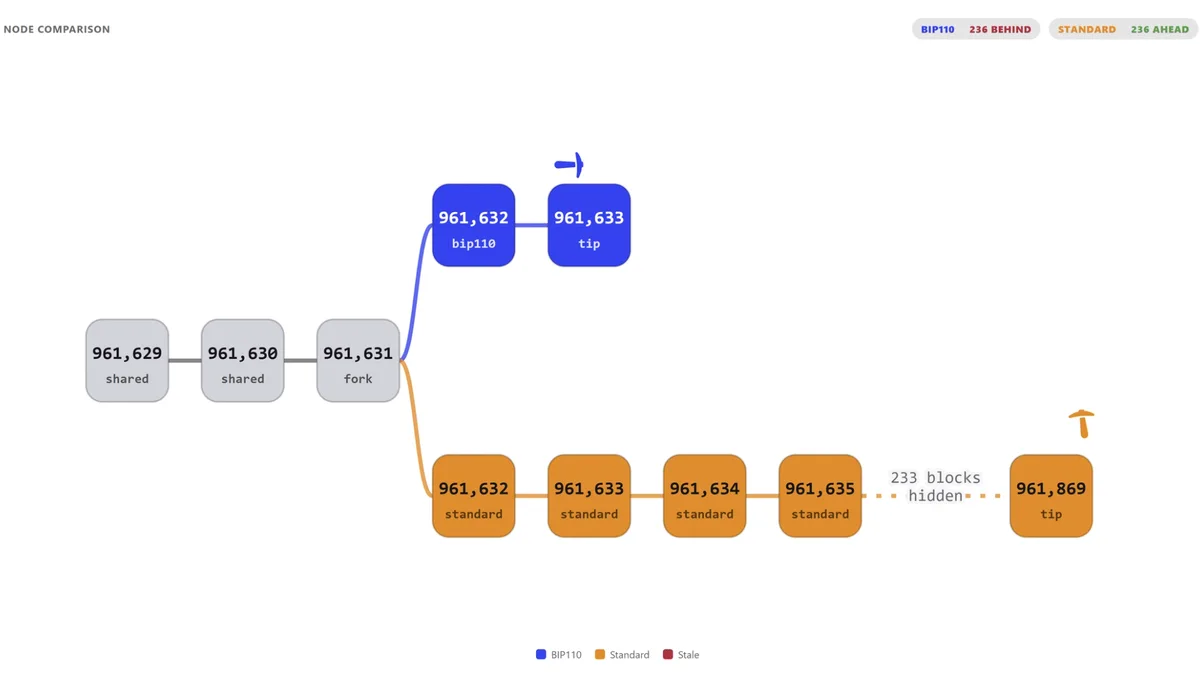
Bitcoin has always been a fascinating experiment in what happens when you remove the referee from a high-stakes game. No central bank, no CEO, no single body calling the shots — just a network of participants voting with their wallets, their mining rigs, and their code. The BIP-110 episode, as framed by CoinDesk, is being held up as a textbook example of that dynamic playing out in real time.
For the uninitiated, a BIP — or Bitcoin Improvement Proposal — is essentially a formal suggestion for changing how Bitcoin works. Think of it like a bill in Congress, except instead of politicians, you have developers, miners, and node operators deciding whether it passes. When the market and the community push back on a proposal, it simply dies. No veto needed, no lawsuit filed. The network speaks, and that's that.
Read more Berkshire Ends 14-Quarter Selling Streak With $23.5B Stock Spree →
What makes this particular episode notable is what it says about Bitcoin's governance model more broadly. Critics of crypto often argue that decentralized systems are chaotic and ungovernable. But the BIP process actually demonstrates a kind of rough, organic order — messy, sure, but responsive to the actual stakeholders rather than to a boardroom or a regulatory body. It's capitalism stripped down to its studs.
The deeper takeaway here is that Bitcoin's resistance to top-down control is a feature, not a bug — even when that means change happens slowly or not at all. If the community doesn't buy in, a proposal goes nowhere, full stop. That might frustrate developers with big ideas, but it also means no single actor can hijack the protocol for their own benefit. For everyday holders, that's actually a reassuring design.
Whether you see this as elegant self-governance or maddening gridlock probably depends on how patient you are and how much you trust markets to sort things out on their own. Either way, Bitcoin keeps proving it's one of the most unconventional economic experiments of our era. Continue reading at CoinDesk.