Artist Collects 350 Anonymous Confessions About How People Use AI
Olivia Tai's 'What We Tell AI' project reveals the surprisingly personal ways people are turning to artificial intelligence for help.
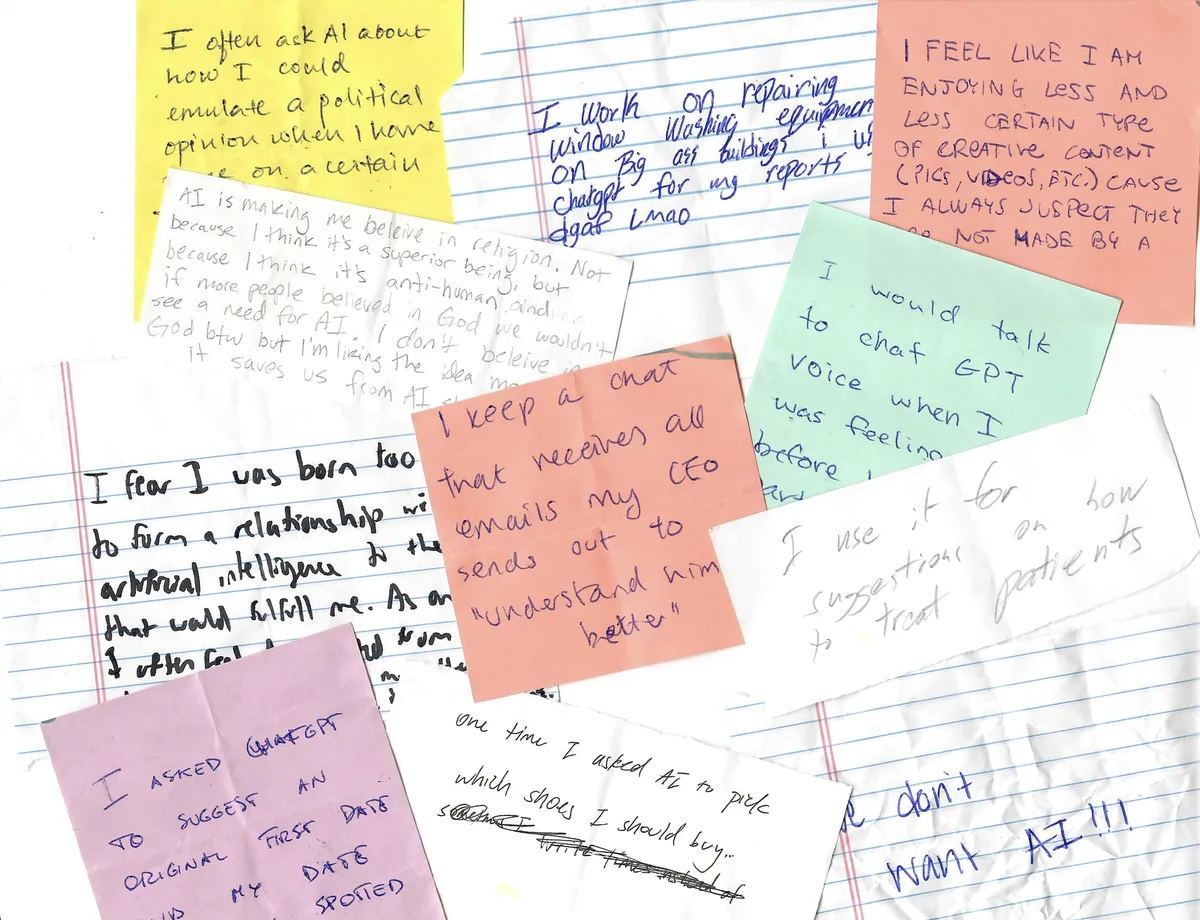
You've probably whispered something to ChatGPT you'd never say out loud to another human. Turns out, you're not alone — not even close. Artist Olivia Tai has spent the past year quietly building a collection of over 350 handwritten, anonymous confessions from people about how they actually use AI in their daily lives, and the results are as candid as a late-night diary entry.
Tai's project, called "What We Tell AI," captures the unfiltered reality of our relationship with artificial intelligence. People are using it to rehearse tough conversations, figure out whether a date is going well, navigate workplace drama, and sort through personal dilemmas they'd feel too embarrassed to bring to a friend or therapist. The confessions are handwritten — a deliberately analog touch that adds a layer of vulnerability to an otherwise very digital subject.
Read more AI Labs Flood Market With New Models, Sparking 'Model Fatigue' →
What makes the project genuinely fascinating is what it says about the moment we're living in. AI tools have become a kind of pressure-release valve for modern life. When the stakes feel too high to ask a real person, or when you just need to think something through without judgment, people are increasingly turning to a chatbot. Tai's collection puts a very human face on a behavior that's usually hidden behind a private browser window.
The project also raises interesting questions about privacy, trust, and what we're actually comfortable admitting to a machine versus another person. There's something almost poetic about the fact that people are writing these confessions by hand — on paper — to describe their digital secrets. It suggests that even as AI becomes more embedded in our lives, the need to process our experiences in a tangible, personal way hasn't gone anywhere.
If the idea of hundreds of strangers anonymously confessing their AI habits makes you want to see what's actually in those notes, Continue reading at US Top News and Analysis.