US-Iran Conflict Rattles Markets as Hormuz Stays Closed
Fighting between the US and Iran rolls into a new week, keeping oil elevated and pushing stocks lower as the Strait of Hormuz remains shut.

If you were hoping markets would get a fresh start this week, think again. The US-Iran conflict is still very much the headline story, with both sides exchanging strikes over the weekend despite earlier signals that diplomacy might resume. President Trump had hinted that talks could continue, but also made clear the ceasefire was over — which, as mixed messages go, is pretty hard to trade around.
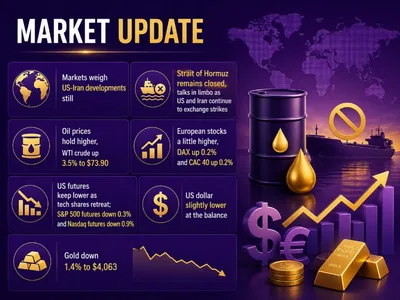
Here's the bigger deal for your portfolio: the Strait of Hormuz is still in de facto closure. That waterway handles a huge chunk of global oil shipments, so when it's blocked, energy markets feel it immediately. It has now been more than three weeks since the ceasefire agreement was signed, and neither side appears anywhere close to sitting back down at the negotiating table. The promise that things would wrap up within 60 days is looking shakier by the hour.
Read more Big-Money Options Activity Spotted in 10 Tech Stocks Today →
Oil is the obvious winner in all this chaos — or loser, depending on which side of the pump you're on. WTI crude jumped roughly 4% to start the week at around $74.33, while Brent crude climbed a similar amount to about $79.10. That kind of energy shock tends to send ripples across everything else, and today is no exception.
The broader market mood is decidedly risk-off. US equity futures are sliding, with S&P 500 futures off about 0.5% and Nasdaq futures dropping a steeper 1.4%. Treasury yields are creeping back up toward 4.58% on the 10-year, revisiting June highs. Even the traditional safe havens aren't playing along — gold fell roughly 1.6% to around $4,054 and silver dropped nearly 3% to about $58.10. When precious metals sell off alongside stocks, it usually signals investors are raising cash fast.
Until there's a credible path toward reopening Hormuz or restarting negotiations, headline risk is going to keep driving market swings. Buckle up. Continue reading at Forexlive.